
EPR Cable Guide 2026: Understanding Extended Power Range USB-C for 240W Charging
USB Power Delivery 3.1 introduced a game-changing feature called Extended Power Range (EPR), enabling USB-C cables to deliver up to 240W USB-C charging power. This represents a massive leap from the previous 100W limit, making it possible to charge gaming laptops, workstations, and even some desktop computers through a single USB-C cable. As a leading USB-C cable manufacturer, Eilinks Electronics has been at the forefront of EPR cable development since the specification was finalized. This guide covers everything you need to know about EPR cables and how they are reshaping USB-C power delivery.
What Is Extended Power Range (EPR)?
Extended Power Range is a feature introduced in the USB Power Delivery 3.1 specification (published in May 2021). It extends the maximum power delivery from 100W (20V/5A at Standard Power Range) to 240W (48V/5A) by raising the voltage ceiling from 20V to 48V.
EPR vs SPR: Technical Comparison
| Parameter | Standard Power Range (SPR) | Extended Power Range (EPR) |
|---|---|---|
| Max Voltage | 20V | 48V |
| Max Current | 5A | 5A |
| Max Power | 100W | 240W |
| USB PD Version | PD 2.0 / PD 3.0 | PD 3.1 |
| Cable Requirement | Standard USB-C cable | EPR-rated cable required |
| Connector Requirement | Standard USB-C | EPR-rated connector (marked) |
The key innovation of EPR is not increasing current (which would require thicker cables), but raising the voltage from 20V to 48V. This approach allows higher power delivery while maintaining the slim USB-C form factor and existing cable gauge requirements.
Why EPR Matters for USB-C Ecosystem
Before EPR, devices requiring more than 100W of charging power had to use proprietary chargers and connectors. Gaming laptops from ASUS, MSI, and Lenovo typically shipped with bulky 150W-240W power bricks using proprietary barrel connectors or rectangular tips. EPR eliminates this fragmentation by providing a universal 240W charging standard through the USB-C port.
For businesses and consumers, this means:
- Universal charging: One charger and one EPR cable can power laptops, monitors, phones, and tablets
- Reduced e-waste: No more proprietary chargers for every device
- Travel simplification: Carry a single charger for all USB-C devices
- Cleaner desk setups: USB-C power delivery replaces multiple power bricks
EPR Cable Requirements
Not every USB-C cable can safely carry 48V/5A (240W). EPR cables must meet specific requirements that go beyond standard USB-C cables:
Electrical Requirements
- 48V voltage rating: All internal wires must be rated for 48V operation (standard cables are rated for 20V)
- 5A current capacity: Power conductors (VBUS) must handle sustained 5A current without excessive heating
- Enhanced insulation: Thicker insulation between conductors to prevent arcing at 48V
- Temperature resistance: Cable jacket must withstand higher operating temperatures
Physical Identification
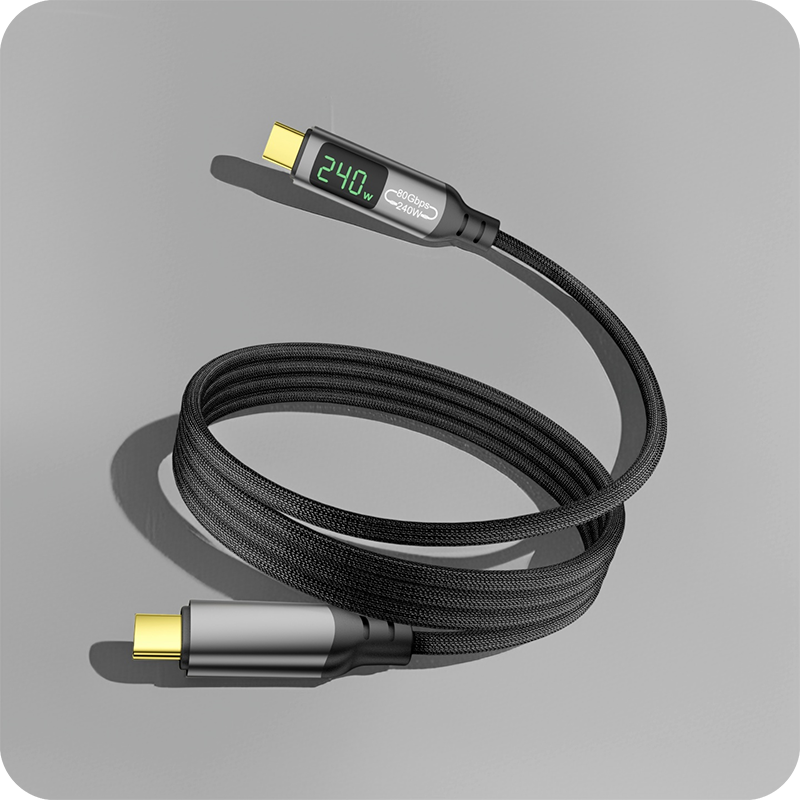
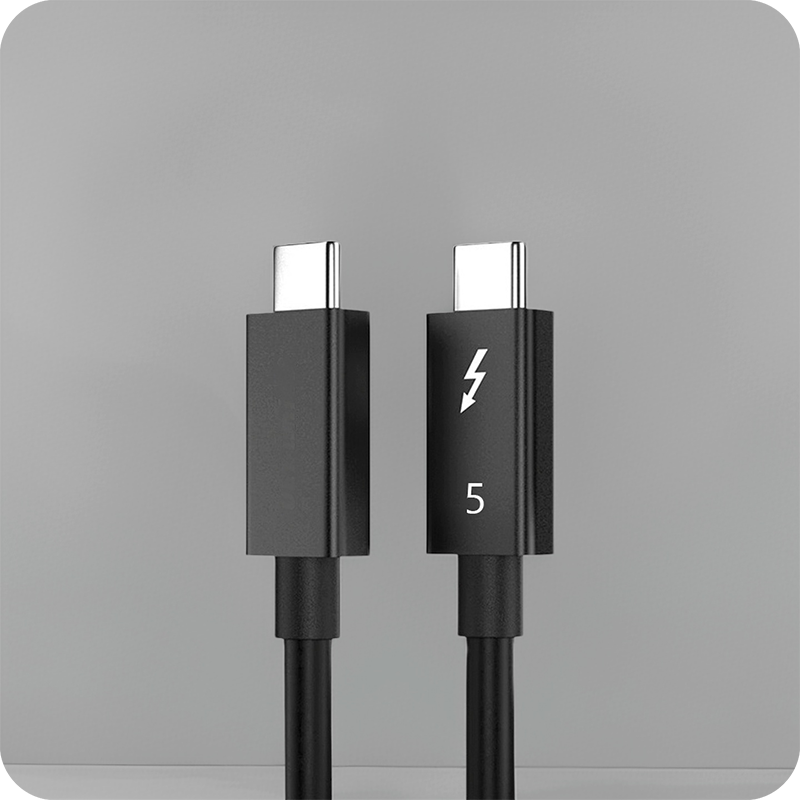
EPR cables can be visually identified by their connectors. USB-IF requires EPR-rated cables to have their USB-C connectors clearly marked. Look for the “240W” marking near the connector or the EPR-specific icon on the cable packaging. A genuine EPR-rated cable from a certified manufacturer will always carry these markings.
Mandatory Certification
USB-IF mandates that all EPR cables pass rigorous testing before bearing the USB-IF certified logo. Testing includes high-voltage insulation resistance, conductor current capacity under load, thermal cycling, and mechanical durability. Eilinks Electronics submits all EPR cables through complete USB-IF certification testing at authorized test laboratories.
Devices That Benefit from EPR
Gaming Laptops
Gaming laptops are the primary beneficiaries of EPR technology. Most gaming laptops require 150W-240W for full performance during gaming sessions. With EPR, a single USB-C charger can replace proprietary power bricks, simplifying setups and enabling USB-C docking station charging.
Professional Workstations
Content creation workstations with high-end CPUs and GPUs often require 150W-230W power supplies. EPR enables these professional machines to adopt USB-C charging, creating a unified power ecosystem across the entire office.
USB-C Monitors and Displays
USB-C monitors that also function as charging docks can now deliver up to 240W of pass-through power to connected laptops. This means a single USB-C connection to your monitor can provide 4K display, USB hub functionality, Ethernet, and full-speed laptop charging simultaneously.
High-Power Peripherals
External GPU enclosures, multi-bay storage systems, and professional audio interfaces benefit from EPR by eliminating the need for separate power supplies. A single EPR cable connection provides both data and sufficient power for these demanding peripherals.
EPR Power Profiles
USB PD 3.1 defines specific Programmable Power Supply (PPS) profiles for EPR operation. These profiles allow fine-tuned voltage and current delivery:
| Power Profile | Voltage | Current | Power | Typical Use |
|---|---|---|---|---|
| SPR Fixed | 5V-20V | Up to 5A | Up to 100W | Standard devices |
| EPR Fixed | 28V | Up to 5A | 140W | Light gaming laptops |
| EPR Fixed | 36V | Up to 5A | 180W | Mid-range gaming laptops |
| EPR Fixed | 48V | Up to 5A | 240W | High-end gaming/workstations |
| EPR PPS | 15V-48V | Up to 5A | Up to 240W | Battery-optimized charging |
The PPS (Programmable Power Supply) mode is particularly important for battery health, as it allows the charger to dynamically adjust voltage in small increments (20mV steps) to match the battery optimal charging curve. This reduces heat generation during charging and extends battery lifespan.
Safety Considerations for EPR
Operating at 48V introduces additional safety requirements. While 48V is generally considered safe under normal conditions, proper design and manufacturing are essential:
- Over-voltage protection: EPR chargers must detect cable resistance and voltage drop, reducing voltage if the cable cannot safely handle 48V
- Short circuit protection: Must disconnect power within milliseconds of detecting a short
- Thermal protection: Both charger and cable must reduce power if temperatures exceed safe limits
- Cable detection: EPR chargers verify the connected cable is EPR-rated before delivering 48V, preventing damage to non-EPR cables
Eilinks Electronics builds comprehensive safety features into every EPR cable, including over-current protection, thermal monitoring, and reinforced connector assemblies. All products undergo 100% electrical safety testing before shipping.
EPR Cable Length Considerations
Cable length has a significant impact on EPR performance due to voltage drop over distance:
| Cable Length | Voltage Drop (at 5A) | Recommended Max Power | Conductor Gauge |
|---|---|---|---|
| 0.5m (1.6 ft) | Less than 0.5V | 240W (full) | 20 AWG |
| 1m (3.3 ft) | 0.5-1V | 240W | 20 AWG |
| 2m (6.6 ft) | 1-2V | 240W (with thicker gauge) | 18 AWG |
| 3m (10 ft) | 2-3V | 200-220W | 18 AWG or thicker |
| 5m (16.4 ft) | 3-5V | 180-200W | 16 AWG required |
For optimal EPR performance, Eilinks Electronics recommends using 1-2 meter cables for full 240W delivery. Longer cables require thicker conductors to minimize voltage drop, which increases cable stiffness and cost. Our product range includes 0.5m, 1m, 1.5m, and 2m EPR cables designed for maximum power delivery efficiency.
EPR vs Proprietary Charging Standards
Before EPR, several proprietary fast-charging standards competed in the market. EPR provides a unified alternative that simplifies the charging ecosystem:
| Standard | Max Power | Connector | Universal | Status in 2026 |
|---|---|---|---|---|
| USB PD 3.1 EPR | 240W | USB-C | Yes | Industry standard |
| Dell ExpressCharge | 240W | Proprietary barrel | No | Transitioning to USB-C |
| Lenovo Slim Tip | 170W | Proprietary rectangular | No | Transitioning to USB-C |
| ASUS proprietary | 240W | Proprietary barrel | No | Transitioning to USB-C |
| Apple MagSafe | 140W | USB-C + MagSafe | Partial | USB-C primary |
The industry trend is clear: by 2027, virtually all laptops will support USB-C PD charging. Major manufacturers have already announced plans to phase out proprietary charging connectors in favor of USB-C with EPR support. Investing in EPR cables and chargers today future-proofs your charging infrastructure.
Frequently Asked Questions
Can I use a non-EPR cable with an EPR charger?
Yes. USB PD 3.1 is backward compatible with earlier USB PD versions and standard USB-C cables. The EPR charger will automatically detect a non-EPR cable and limit power delivery to 100W (Standard Power Range). You will not get the full 240W, but the connection remains completely safe. To achieve full 240W charging, both the charger and the EPR-rated cable must support EPR.
Is 48V safe for USB-C cables?
Yes, 48V is within the SELV (Safety Extra Low Voltage) limit defined by IEC 61140, which considers voltages up to 60V DC as safe under normal conditions. USB-IF requires extensive safety testing for all EPR cables and chargers, including insulation resistance, dielectric strength, and temperature rise tests. A properly manufactured and certified EPR cable from a reputable manufacturer like Eilinks Electronics is completely safe for everyday use.
Do I need EPR for my laptop?
If your laptop requires more than 100W for full-speed charging or peak performance, you benefit from EPR. Most ultrabooks and standard business laptops charge fine at 65W-100W using standard USB PD. Gaming laptops, mobile workstations, and high-performance creator laptops that require 130W-240W will see the most significant benefit from EPR technology and an EPR cable.
What happens if I plug an EPR cable into a non-EPR device?
Nothing harmful happens. The USB PD protocol negotiates power delivery between the source and the device. If the device only supports standard PD (up to 100W), the system will operate within those limits regardless of the cable EPR capability. The EPR cable simply acts as a high-quality standard USB-C cable in this scenario.
Can an EPR cable carry data at USB4 speeds?
Yes. EPR capability and data speed are independent specifications. An EPR cable can simultaneously support 240W power delivery and USB4 data transfer at 40 Gbps. However, you should verify that the specific cable supports both EPR and the desired data speed, as some EPR cables are designed primarily for charging and may only support USB 2.0 data rates. Always check the product specifications for both power and data capabilities.
