
How to Identify Fake and Low-Quality USB-C Cables in 2026: A Complete Buyer’s Guide
The global market is flooded with counterfeit and substandard USB-C cables that can damage your devices, cause data loss, or even pose safety hazards. As a certified USB-C cable manufacturer with over 15 years of experience, Eilinks Electronics has seen firsthand the consequences of using fake cables. This guide teaches you how to identify fake USB-C cables, understand quality certifications, and choose reliable suppliers for your business or personal needs.
Why Fake USB-C Cables Are Dangerous
USB-C cables carry both data and power, sometimes at high voltages (up to 48V with EPR) and high currents (up to 5A). A poorly manufactured cable can cause:
- Device damage: Incorrect resistor values in the cable can cause overvoltage delivery, permanently damaging your laptop, phone, or tablet
- Fire hazard: Thin conductors unable to handle rated current can overheat, melt insulation, and ignite
- Data corruption: Poor shielding and low-quality connectors cause signal errors, resulting in corrupted file transfers
- Slow charging: Counterfeit cables often use thinner-than-specified conductors, delivering only a fraction of rated charging speed
- Reduced lifespan: Inferior materials degrade quickly, causing connection failures within weeks or months
The most dangerous fake cables are those that claim to support high-speed data or high-wattage charging but lack the internal components to deliver safely. A counterfeit EPR cable that cannot safely handle 48V/5A is a serious safety hazard.
Visual Inspection: Spotting Fakes
Connector Quality
The USB-C connector is the most visible indicator of cable quality:
- Genuine: Connector shell is precision-molded with smooth edges, consistent gaps, and crisp branding. The internal tongue is centered and firmly attached. The CC pin detection resistors are properly rated (56k ohm for USB 2.0, proper pull-up for higher speeds).
- Fake: Rough molding seams, loose connector shell, off-center internal tongue, missing or incorrect brand markings. The connector may feel loose when plugged in.
Cable Jacket and Strain Relief
The outer jacket and strain relief boot reveal manufacturing quality:
- Genuine: Smooth, consistent jacket with uniform diameter. Strain relief boot is firmly attached to the connector with no gap. TPU or braided nylon jackets indicate higher quality.
- Fake: Uneven jacket surface, visible glue at connector junction, thin or loosely applied strain relief. PVC jackets on budget cables are more prone to cracking and tangling.
Printed Markings
USB-IF certified cables carry specific markings:
- USB-IF certified logo: The trident USB logo with the certification mark. Check usb.org to verify certification status.
- Speed marking: Genuine cables display their speed tier (SS for 5Gbps, SS10 for 10Gbps, SS20 for 20Gbps, or 40 for USB4).
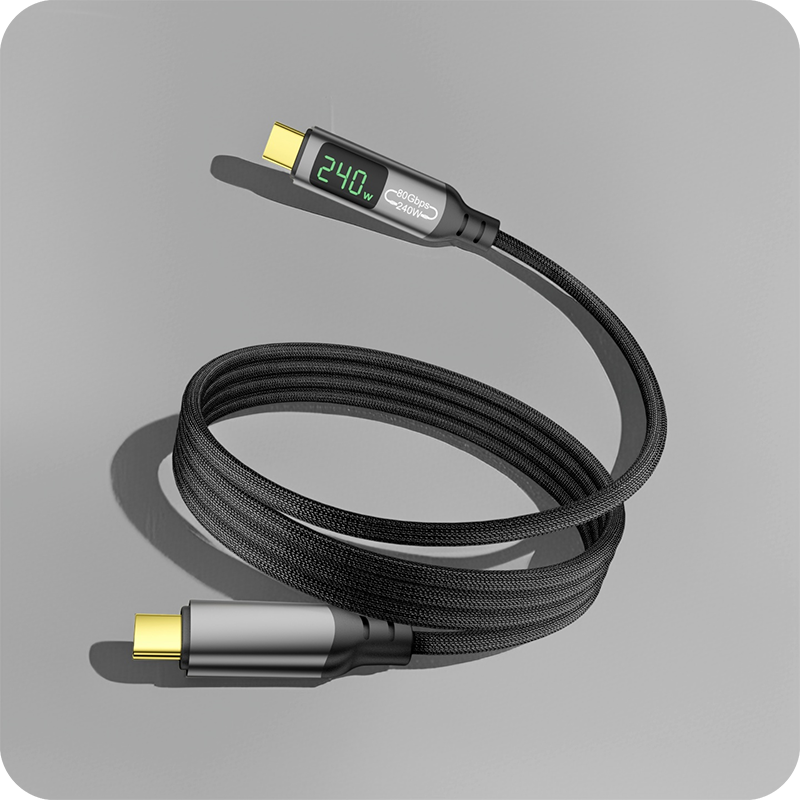
- Power marking: EPR-rated cable products display “240W” or the EPR icon near the connector.
- Brand information: Legitimate manufacturers print their brand name, model number, and compliance marks (CE, FCC, RoHS) on the cable jacket.
Counterfeit cables often print USB logos without actual certification, use blurry or incorrect markings, or omit compliance information entirely.
Technical Testing Methods
Continuity Testing
A multimeter continuity test reveals whether all pins in the USB-C connector are properly connected:
- A full-featured USB-C cable (USB 3.2 or USB4) should have continuity on all 24 pins of the USB-C connector
- A USB 2.0 cable only needs continuity on the power (VBUS, GND), USB 2.0 data (D+, D-), and CC pins
- Missing connections on high-speed differential pairs (TX/RX) indicate the cable cannot deliver rated data speeds
CC Pin Resistance Measurement
The Configuration Channel (CC) pins use specific resistor values to signal cable capabilities to the host device:
- USB 2.0 Type-C cable: 56k ohm pull-down resistor on one CC pin (Ra)
- USB 3.2/USB4 cable: Additional termination for high-speed lane detection
- EPR cable: Properly rated termination for 48V signaling
Incorrect CC resistance can cause the connected device to deliver incorrect voltage, potentially damaging the cable or device. Google engineer Benson Leung famously documented this issue with early USB-C cables, finding that many third-party cables had dangerously incorrect resistor values.
Load Testing
Professional load testing verifies that a cable can safely deliver its rated current:
- Apply rated current (3A for standard cables, 5A for 240W USB-C cables) through the cable
- Measure voltage drop across the cable length
- Monitor cable temperature for 30+ minutes at full load
- A quality cable should show less than 3% voltage drop and temperature rise under 30 degrees Celsius
Eilinks Electronics performs comprehensive load testing on every production batch, with detailed test reports available for OEM customers upon request.
Understanding Certifications
USB-IF Certification
The USB Implementers Forum operates the official USB certification program. USB-IF certified cables must pass testing at authorized independent test laboratories covering:
- Electrical safety and insulation resistance
- Signal integrity at rated speed
- Connector mechanical durability (10,000 insertion cycles)
- Environmental resistance (temperature, humidity)
- Electromagnetic compatibility (EMC)
Verify certification by searching the product name or manufacturer on the USB-IF product database at usb.org.
UL and CE Marking
UL (Underwriters Laboratories) certification and CE (Conformite Europeenne) marking indicate the cable meets safety standards for the US and European markets respectively. These are legally required for commercial sale in their respective regions. Counterfeit cables frequently display fake UL and CE marks that cannot be verified.
HDMI Certification
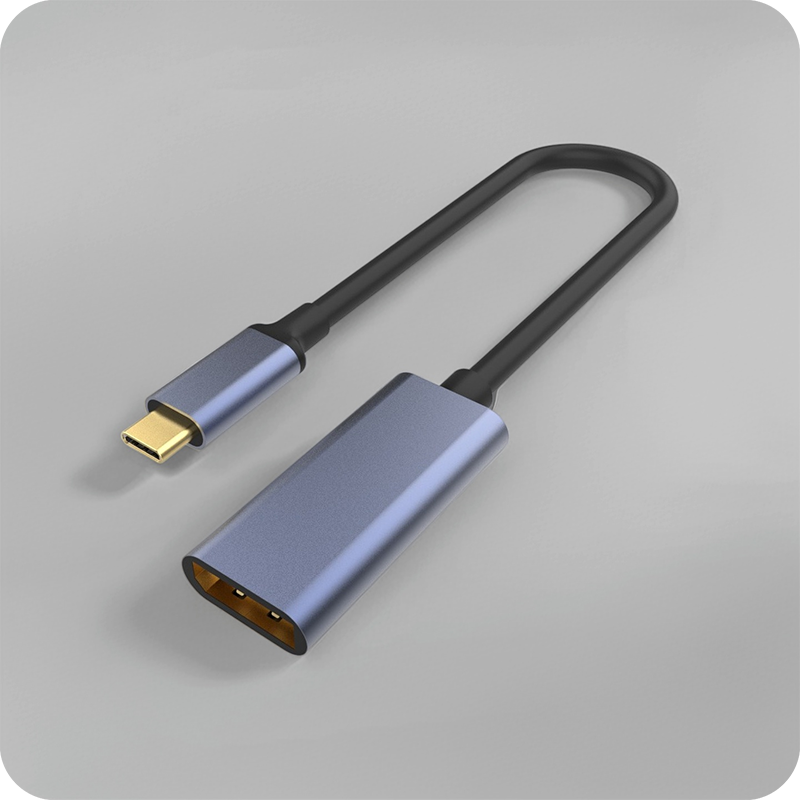
For USB-C to HDMI cables, HDMI Adopter certification ensures the cable meets HDMI signal quality standards at its rated resolution. An HDMI Premium Certified Cable badge indicates the cable passed testing for 18 Gbps bandwidth (4K@60Hz).
Red Flags When Buying USB-C Cables
Too Good to Be True Pricing
A genuine USB4 cable or Thunderbolt 4 cable costs $15-40 at retail. If a listing claims USB4/Thunderbolt 4 speeds for $3-5, it is almost certainly counterfeit. High-speed USB cables require expensive controllers, precision connectors, and quality shielding that cannot be manufactured at rock-bottom prices.
Vague or Missing Specifications
Legitimate manufacturers provide detailed specifications: supported USB generation, maximum data speed, PD wattage, cable length, conductor gauge, and jacket material. Listings with vague descriptions like “high speed USB-C cable” without specific speed ratings are suspicious.
No Brand or Unknown Brand
Well-established manufacturers like Eilinks Electronics have verifiable business histories, physical addresses, and traceable supply chains. Anonymous sellers on marketplaces with no company information are high-risk sources for cables.
Inconsistent Reviews
If a product has thousands of five-star reviews but the review text is generic (“great cable, works well”) with no specific performance details, the reviews may be fake. Look for detailed reviews that mention actual transfer speeds, charging performance, or comparison with other cables.
Missing Compliance Marks
No CE, FCC, RoHS, or USB-IF markings on the cable or packaging indicates the product has not been tested or certified by any recognized body. These markings are legally required for commercial sale in most markets.
How Businesses Can Avoid Counterfeit Cables
Source Directly from Manufacturers
The most reliable way to ensure cable quality is to source directly from certified manufacturers. Eilinks Electronics works with businesses of all sizes, offering:
- Factory-direct pricing: Eliminate distributor markups and counterfeiting risk
- Full traceability: Every cable batch is documented from raw materials to finished product
- Custom specifications: Choose exact cable length, connector style, speed tier, and branding
- Certification packages: USB-IF, UL, CE, FCC, RoHS, and REACH certification included
Request Test Reports
Before placing large orders, request third-party test reports showing the cable meets its rated specifications. Legitimate manufacturers routinely test their products and can provide reports from recognized laboratories like UL, Intertek, SGS, or TUV.
Order Samples First
Always order sample cables for evaluation before committing to large quantities. Test the samples for:
- Data transfer speed at rated specification
- Charging speed and power delivery capability
- Build quality and connector fit
- Packaging and labeling accuracy
Audit the Factory
For large ongoing orders, consider auditing the manufacturing facility. Eilinks Electronics welcomes factory visits and can arrange video tours of our production lines, quality control processes, and testing laboratories.
The Cost of Counterfeit Cables: Real-World Examples
| Scenario | Cable Used | Consequence | Estimated Cost |
|---|---|---|---|
| Laptop charging failure | Fake 100W PD cable | Laptop battery damaged, data loss | $500-$2000 repair |
| External SSD corruption | Counterfeit USB 3.2 cable | Signal errors corrupt project files | $200-$5000 data recovery |
| Phone overheating | Substandard cable | Battery swelling, phone replacement | $800-$1200 replacement |
| Conference room failure | Low-quality HDMI adapter | Presentation failure, client impact | $1000+ lost business |
| Fire incident | Non-EPR cable at 48V | Desk fire, equipment damage | $5000-$50000+ damage |
The cost of counterfeit cables far exceeds the small savings from buying cheap alternatives. Investing in genuine, certified cables from a trusted USB-C cable manufacturer protects your devices, your data, and your safety.
Frequently Asked Questions
How can I verify if a USB-C cable is USB-IF certified?
Visit the USB-IF product certification database at usb.org and search for the cable model or manufacturer name. Certified products appear in the database with their tested specifications. If you cannot find a product in the database, it may not be certified. You can also look for the USB-IF certified trident logo on the cable packaging and verify the certification ID number if provided.
Are all cheap USB-C cables dangerous?
Not necessarily. A cheap USB 2.0 cable from a reputable manufacturer for basic charging is not inherently dangerous, as USB 2.0 operates at lower voltages and currents. The real danger comes from cheap cables that claim high-speed data (USB 3.2/USB4) or high-wattage charging (100W/240W) but use underspecified components. If you need a USB4 cable or EPR-rated cable, always buy from certified sources and verify the specifications.
Can a fake USB-C cable damage my laptop?
Yes, this is the primary danger of counterfeit cables. If the CC pin resistor values are incorrect, the connected charger may deliver higher voltage than your device expects, potentially damaging internal components. This is especially dangerous with 240W USB-C EPR cables, where incorrect voltage delivery at 48V can cause immediate and permanent damage. Always use certified cables from reputable manufacturers.
How do I know if my USB-C cable supports the speed I need?
Check for speed markings on the cable jacket near the connector: “SS” indicates 5 Gbps, “SS10” indicates 10 Gbps, and “40” indicates 40 Gbps (USB4/Thunderbolt). Also verify the USB-IF certification database for the specific model. When in doubt, test the cable with a known high-speed device (like an NVMe SSD enclosure) and benchmark the actual transfer speed using tools like CrystalDiskMark or Blackmagic Disk Speed Test.
Where can I buy genuine USB-C cables in bulk?
The most reliable source for bulk USB-C cable purchases is directly from certified manufacturers. Eilinks Electronics offers factory-direct pricing for orders of 500+ units, with full USB-IF certification, custom branding, and comprehensive quality documentation. We serve customers in over 60 countries and maintain strict quality control throughout the manufacturing process. Contact our sales team for a personalized quote based on your specific cable requirements and volume needs.
