
Thunderbolt Cable vs USB-C Cable: Which One Do You Actually Need?
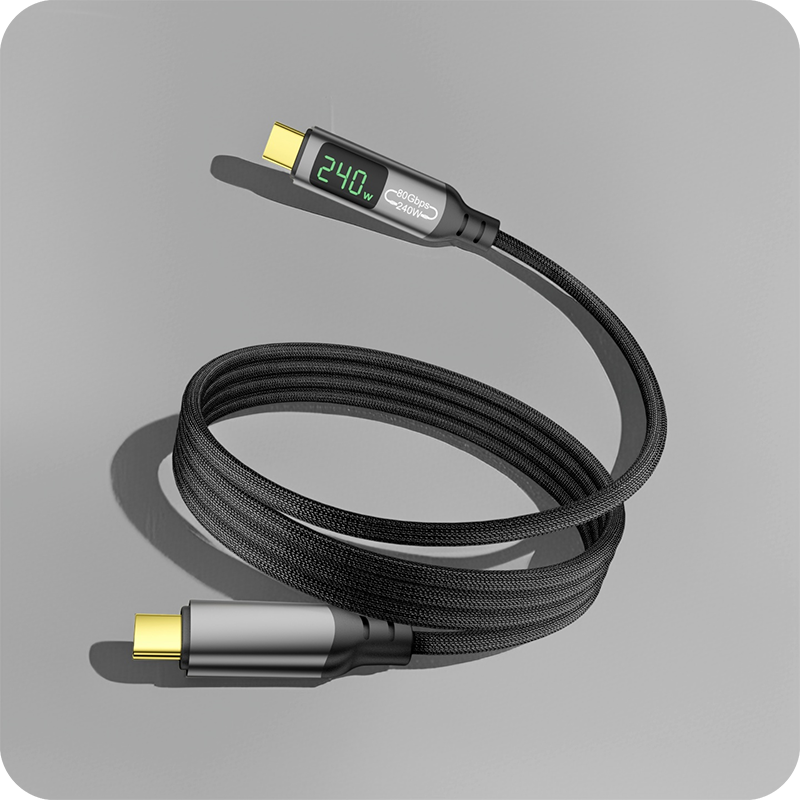
If you’ve ever stood in an electronics store staring at a wall of cables wondering “what’s the difference between Thunderbolt and USB-C?”, you’re not alone. The confusion is understandable because every Thunderbolt cable uses a USB-C connector, but not every USB-C cable is Thunderbolt-capable. At Eilinks Electronics, we manufacture both types, and this guide clears up the confusion once and for all.
The Fundamental Difference: Protocol vs Connector
Here’s the key insight that most buyers miss:
- USB-C = the physical connector shape (the oval plug with reversible orientation)
- Thunderbolt = a high-speed data/protocol standard developed by Intel that uses USB-C connectors
Think of it this way: USB-C is like a door frame, while Thunderbolt is a super-highway that happens to use that same doorway. A standard USB-C cable can only handle regular traffic (USB data), but a Thunderbolt cable handles highway-speed traffic plus everything else.
Thunderbolt Generations Explained
| Specification | Max Data Speed | Video Output | PCIe Tunneling | Daisy Chain |
|---|---|---|---|---|
| Thunderbolt 3 | 40 Gbps | Single 5K / Dual 4K @60Hz | Yes (PCIe 3.0 x4) | Up to 6 devices |
| Thunderbolt 4 | 40 Gbps | Two 4K @60Hz OR one 8K @60Hz | Yes (PCIe 3.0 x4) | Up to 6 devices |
| Thunderbolt 5 | 80 Gbps (120Gbps Boost) | Three 4K @60Hz OR one 8K @60Hz HDR | Yes (PCIe 4.0 x4) | Up to 6 devices |
When You Need a Thunderbolt Cable
A Thunderbolt cable is essential when your workflow involves any of these scenarios:
Professional Video Editing
- Connecting external NVMe SSD arrays at full PCIe bandwidth for 4K/8K video editing
- Daisy-chaining multiple displays without performance degradation
- eGPU (external GPU) connections for accelerated rendering
Creative Professional Workstations
- High-resolution monitor setups (dual/triple 4K or single 8K)
- Audio interface connectivity with ultra-low latency requirements
- Fast backup to RAID storage systems via PCIe-attached enclosures
Data Center and Enterprise Applications
- External GPU acceleration for AI/ML workloads
- High-speed networking through Thunderbolt bridges
- Multi-device docking stations serving multiple workstations
When a Regular USB-C Cable Is Sufficient
For most everyday users, a quality USB-C cable covers all their needs:
| Use Case | Cable Type Needed | Reason |
|---|---|---|
| Charging phone/tablet | USB 2.0 Cable | No high speed required |
| Transferring photos from camera | USB 3.2 Cable | 5-20 Gbps sufficient |
| Connecting external hard drive | USB 3.2 Cable | SATA drives max at 6 Gbps anyway |
| Charging laptop (up to 140W) | USB 3.2 Cable + PD | Power delivery doesn’t need TB |
| Single 4K display output | USB 3.2 Cable + Alt Mode | DisplayPort Alt Mode handles this |
| Multiple 4K monitors + fast storage | Thunderbolt 4 Cable | Prioritizes bandwidth allocation |
| External GPU gaming | Thunderbolt 4/5 Cable | Requires full PCIe x4 tunneling |
Cost Comparison: Thunderbolt vs Standard USB-C
One reason people hesitate before choosing Thunderbolt 4 Cable or Thunderbolt 5 Cable products is cost. Here’s what you’re actually paying for:
- Active vs passive components: Thunderbolt cables longer than 0.8m require active signal conditioning chips inside each connector, adding $3-$8 in BOM cost alone
- Licensing fees: Intel charges per-unit certification royalties for Thunderbolt branding
- Tighter tolerances: Manufacturing yield rates are lower due to stricter impedance control requirements
- Testing overhead: Each cable must pass Intel’s certification test suite before shipment
At Eilinks Electronics, we offer competitive pricing on both standard USB-C cable and certified Thunderbolt cable product lines by leveraging our vertically integrated manufacturing operations.
Compatibility Matrix: What Works With What
This is where it gets tricky but also important:
- Thunderbolt 3 device + Thunderbolt 3 cable = Full 40Gbps operation ?
- Thunderbolt 4 device + USB-C cable = Falls back to USB speeds (~10-20 Gbps) ??
- USB-C device + Thunderbolt cable = Works fine at USB speeds ? (backward compatible)
- Thunderbolt 5 device + Thunderbolt 4 cable = Works at TB4 speeds (40Gbps) ??
- Thunderbolt 5 device + Thunderbolt 5 cable = Full 80Gbps operation ?
The rule of thumb: a higher-spec cable always works with lower-spec devices, but a lower-spec cable limits higher-spec devices.
How to Identify a Genuine Thunderbolt Cable
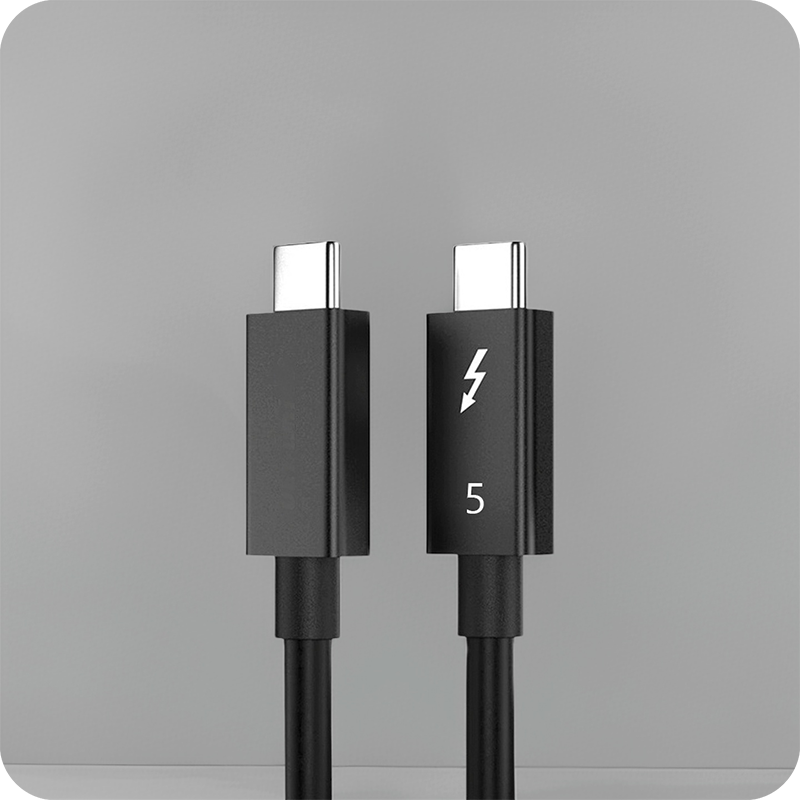
- Look for the lightning bolt logo: Certified cables feature Intel’s Thunderbolt logo near the connector
- Check packaging: Must explicitly state “Thunderbolt Certified” or “Intel Certified”
- Verify seller credentials: Only authorized distributors sell genuine certified products
- Beware of “Thunderbolt-compatible” claims: This usually means USB-only, not true Thunderbolt
- Use Intel’s verification tool: Intel provides an online database of certified products at thunderbolttechnology.net
Need Premium Thunderbolt or USB-C Cables?
Eilinks Electronics manufactures both standard USB-C cable and fully certified Thunderbolt 4 Cable/Thunderbolt 5 Cable products. Request samples at our contact page.
Making the Right Choice
Your decision boils down to three questions:
- What devices are you connecting? Check their port specifications carefully
- What’s your maximum bandwidth need today AND in 2 years? Future-proofing matters
- Is your budget flexible enough for Thunderbolt premium? If yes, go Thunderbolt for maximum versatility
For creative professionals and power users, investing in a quality Thunderbolt 4 Cable or Thunderbolt 5 Cable pays dividends in productivity. For general home and office use, a well-made USB 3.2 Cable from a reputable manufacturer like Eilinks Electronics delivers excellent value.
Browse our complete range at Thunderbolt Cables and USB-C Cables.
