
USB-C Fiber Optic Cable: The Ultimate Guide for High-Speed Long-Distance Transmission (2026)
As data transfer demands continue to surge in 2026, USB-C Cable technology is evolving beyond copper — and fiber optic USB-C cables are at the forefront of this revolution. Eilinks Electronics, a leading USB-C cable manufacturer in China, explores everything you need to know about USB-C fiber optic cables, from fundamentals to real-world applications.
What Is a USB-C Fiber Optic Cable?
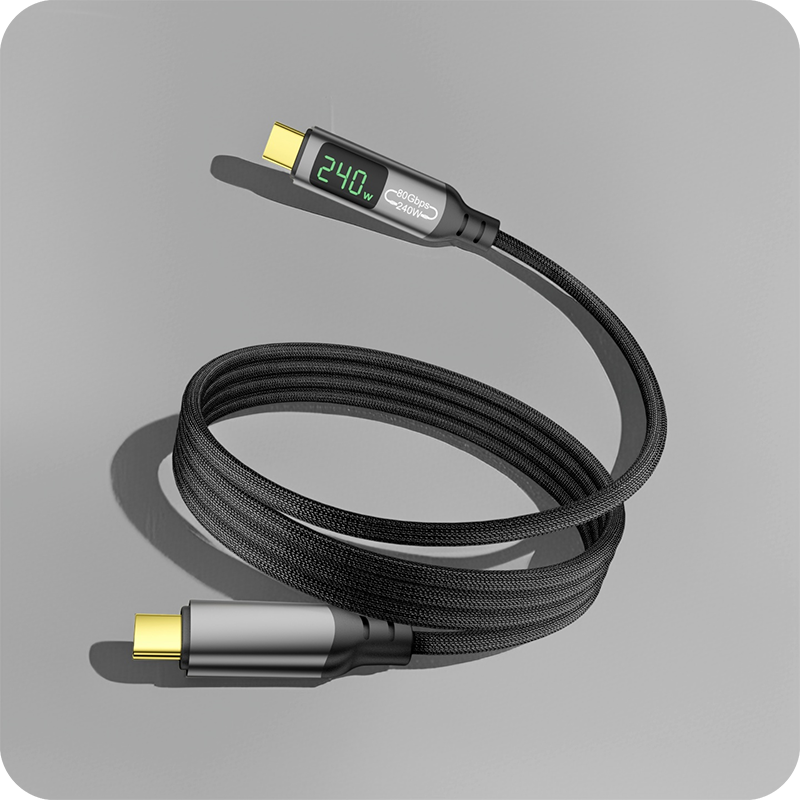
A USB-C fiber optic cable (also known as an active optical cable or AOC) uses optical fiber strands for data transmission instead of traditional copper conductors. The USB-C Cable connectors at each end convert electrical signals to light pulses (transmit side) and back to electrical signals (receive side) using onboard electro-optical transceivers.
- Copper still handles the low-power USB bus power delivery (5V/900mA or negotiated via E-Marker)
- Data signals travel as light through fiber cores, enabling zero electromagnetic interference
- Maximum bandwidth limited only by transceiver speed — not cable resistance or capacitance
USB-C Fiber Optic vs. Copper Cable: Side-by-Side Comparison
| Feature | USB-C Fiber Optic (AOC) | Standard Copper USB-C |
|---|---|---|
| Max practical length | Up to 100m+ | 2m (USB4), 5m (USB 3.2 Gen 1) |
| EMI immunity | Complete (no electrical signals in fiber) | Requires shielding |
| Weight (per meter) | ~30% lighter | Standard |
| Bend radius | Larger minimum bend radius required | More flexible |
| Power delivery | Limited (USB bus power only, 5V/0.9A) | Up to 240W (EPR) |
| Plug-and-play | Yes, no drivers needed | Yes |
| Cost | Higher ($50–$300+) | Lower ($5–$50) |
| Directional? | Often directional (TX/RX marked) | Bidirectional |
Supported Protocols and Speed Grades
USB4 Gen 3×2 Fiber AOC (40Gbps)
The highest-performance USB-C AOC cables support the full USB4 Cable Gen 3×2 specification at 40Gbps bidirectional. Eilinks Electronics engineers these cables with precision-matched transceivers to maintain signal integrity across the full cable length. These cables are ideal for:
- Long-distance 8K display connections (DisplayPort 2.1 Alt Mode)
- 40Gbps NVMe external RAID storage enclosures up to 30m
- Live broadcast production infrastructure
- Data center optical interconnects
USB 3.2 Gen 2 Fiber AOC (10Gbps)
Mid-range fiber USB-C Cable solutions operating at 10Gbps offer the best cost-performance ratio for enterprise environments. Common use cases include long-run industrial camera connections, medical imaging equipment, and digital signage installations.
Thunderbolt Fiber AOC
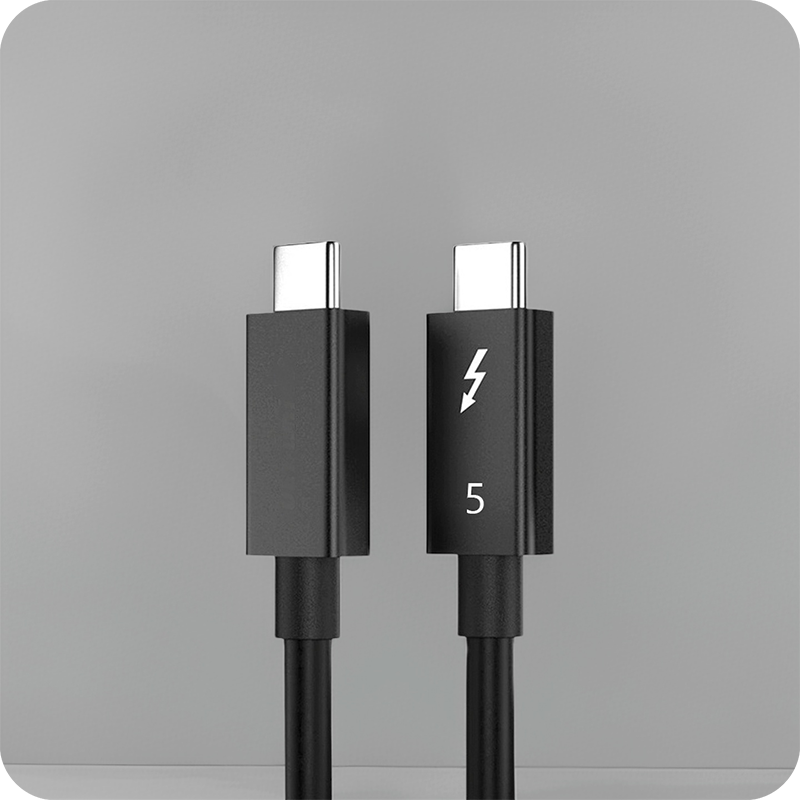
Thunderbolt 4 Cable and Thunderbolt 5 Cable fiber versions are available but require Intel Thunderbolt certification — making them significantly more expensive. Thunderbolt 5 fiber AOC at 120Gbps (PAM-4 mode) represents the cutting edge for PCIe-over-fiber applications.
Key Technical Specifications to Look For
Fiber Type
Most USB-C AOC cables use multimode fiber (OM3 or OM4) with a 50/125 µm core. Single-mode fiber is rare in USB-C AOC but achievable for very long enterprise runs. The fiber type determines the maximum attenuation-free distance at a given wavelength (typically 850nm for OM3/OM4).
Transceiver Chipset
The onboard electro-optical transceiver chipset determines the cable’s power consumption, latency, and compatibility. Leading chipsets in 2026 include solutions from Broadcom, Inphi (now Marvell), and Lumentum. Eilinks Electronics conducts rigorous transceiver qualification testing to ensure compatibility with all major host controllers.
Power Consumption of Transceivers
Fiber AOC cables draw power from the USB host — typically 300–900mW per end. The cable must not exceed the USB specification’s VBUS current limits. High-quality cables include low-dropout (LDO) regulators to maintain stable transceiver power even under VBUS fluctuations.
Installation and Handling Guidelines
Minimum Bend Radius
Unlike copper cables, fiber optic strands can crack if bent too sharply. Always observe the specified minimum bend radius — typically 30mm for installation and 15mm when static. Violating this causes increased attenuation and eventual fiber failure.
Cleaning Fiber End-Faces
The USB-C fiber optic cable’s transceiver-side fiber end-faces are factory-sealed and do not require field cleaning. However, if you notice degraded performance, inspect the USB-C connector’s electrical contacts for debris using a fiber inspection scope.
Cable Management
- Use cable trays with generous radius bends — never route fiber through sharp-edged conduits
- Label both ends with directional markings (Source / Display) to avoid polarity reversal
- Avoid coiling fiber AOC tightly — use figure-8 coiling technique for storage
- Keep away from high-temperature surfaces (>70°C operating limit for most AOC cables)
Typical Applications in 2026
Professional AV and Broadcast
Television studios and live event production houses use fiber USB-C Cable runs to connect remote cameras to 8K production switchers without signal degradation. The zero-EMI characteristic of fiber is critical in environments with powerful lighting rigs and RF transmitters.
Healthcare and Medical Imaging
Hospitals route fiber USB-C cables from surgical suites to radiological imaging workstations. The non-conductive fiber eliminates ground loop risks and ensures patient electrical safety standards (IEC 60601) are maintained.
Industrial Automation and Robotics
In factory floor environments with variable-frequency drives and high-current motor controllers generating severe EMI, fiber USB-C Cable solutions eliminate the need for expensive industrial-grade shielded copper alternatives.
Data Centers and Co-location Facilities
Data center operators use fiber USB-C AOC to interconnect top-of-rack switches with NVMe-oF storage enclosures, achieving 40Gbps per port with zero signal degradation across 30m runs — a performance profile impossible with passive copper.
Choosing the Right USB-C Fiber Optic Cable
Step 1: Confirm Your Required Distance
If your application is under 2m, copper USB4 Cable is almost always the better choice economically. Fiber AOC becomes compelling at 5m and indispensable at 10m+.
Step 2: Verify Host and Device Compatibility
While fiber AOC cables are plug-and-play, verify that your host controller’s USB retimer settings support AOC cable lengths. Some motherboards have conservative retimer configurations that may need BIOS tuning for AOC cables beyond 15m.
Step 3: Assess Power Delivery Requirements
Fiber AOC cables do not support high-wattage USB Power Delivery — the copper conductors in the cable are only for bus power (max ~4.5W). If you need data AND 100W+ charging on the same cable, copper EPR-rated USB-C Cable is the correct choice.
Why Choose Eilinks Electronics for USB-C Fiber Optic Cables
Eilinks Electronics offers custom-length USB-C AOC cables from 5m to 100m, with factory-certified transceiver qualification and full USB4/Thunderbolt compliance testing. Our OEM/ODM programs allow brand customization with your company logo, custom packaging, and private-label documentation — ideal for AV integrators, medical device manufacturers, and enterprise IT solution providers.
Contact Eilinks Electronics at our website for wholesale pricing, technical data sheets, and sample requests for fiber optic USB-C Cable solutions tailored to your application.
