
USB-C Cable Latency and Gaming Performance: What Every Gamer Needs to Know in 2026
Does your USB-C Cable affect gaming latency? The answer is more nuanced than most gamers realize. Eilinks Electronics, a leading USB-C cable manufacturer, explains the real relationship between USB-C cable quality, latency, and gaming performance in this definitive 2026 guide.
Understanding Input Latency Sources in Gaming
Total gaming input latency is the sum of multiple components in the signal chain:
- Game engine processing and render time: 5–50ms
- GPU render pipeline: 2–20ms
- Display signal processing and panel response: 1–10ms
- USB controller polling rate (mouse/keyboard): 0.125ms at 8000Hz
- Cable signal propagation delay: <0.01ms (negligible)
The USB-C Cable connecting your device contributes essentially zero measurable latency to this chain. At USB 3.2 Gen 2 speeds, signal propagation through 2m of copper is approximately 9 nanoseconds — three orders of magnitude below human perception and far smaller than any other latency source.
Where USB-C Cable Quality Actually Impacts Gaming
Display Connection: Frame Rate and Image Quality
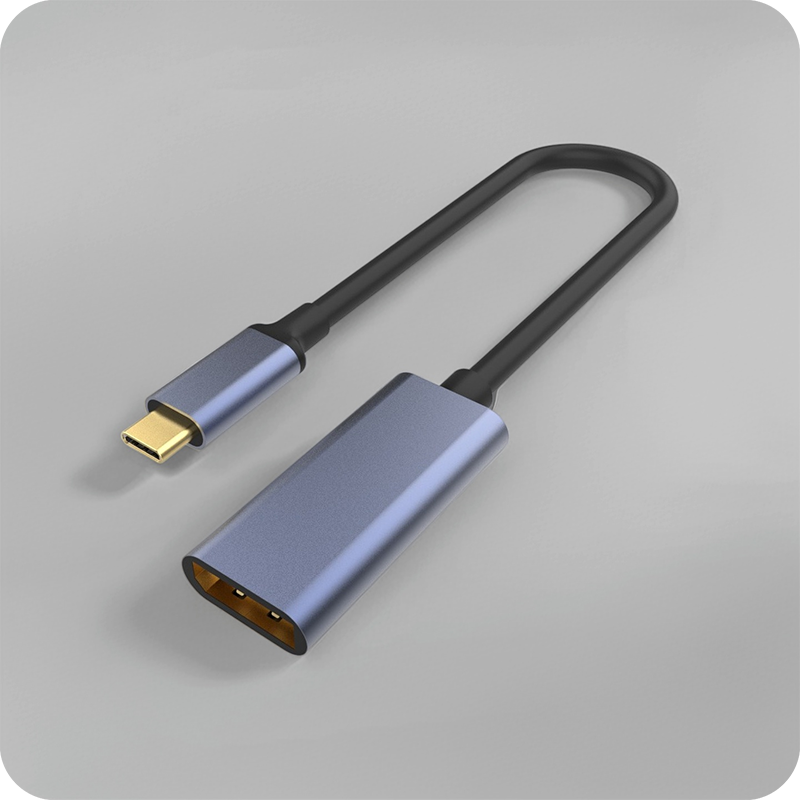
When using a USB-C to HDMI or USB-C to DisplayPort cable for your gaming monitor, cable quality determines whether you can achieve the maximum resolution and refresh rate combination your monitor supports. A substandard USB-C Cable with poor impedance control may:
- Fail to reliably carry 4K@144Hz signals (DisplayPort 1.4 HBR3 bandwidth requirement)
- Show pixel flickering, dropped frames, or intermittent signal loss at high refresh rates
- Force a fallback to lower resolution or refresh rate to maintain signal stability
- Cause monitor to disconnect and reconnect mid-session (the dreaded “display flicker” during gaming)
eGPU Connection: Full PCIe Bandwidth
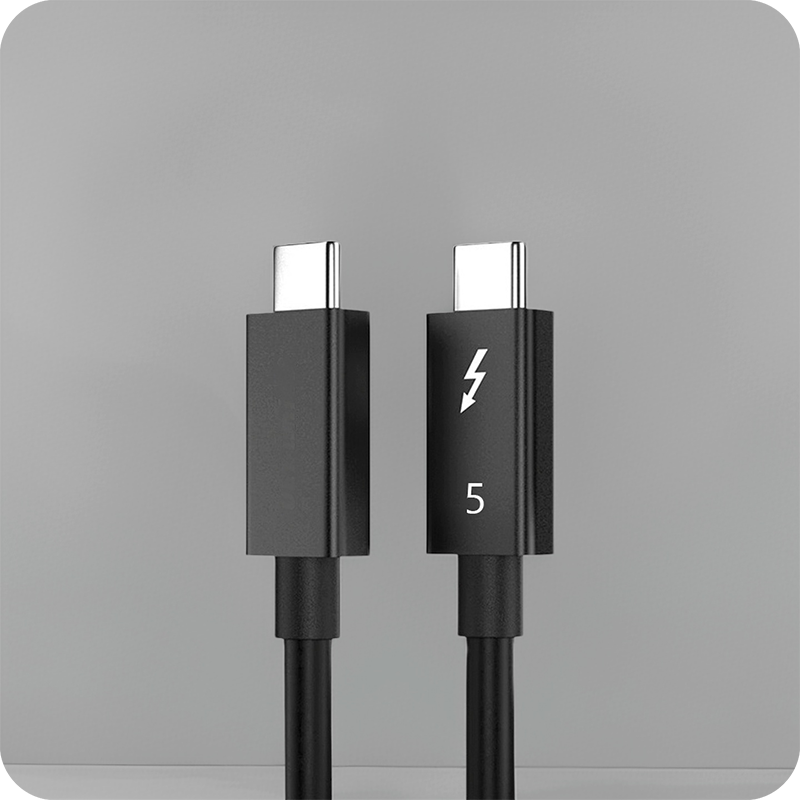
External GPU (eGPU) enclosures connect via Thunderbolt 4 Cable or Thunderbolt 5 Cable. Cable quality is critical here — a marginal cable may link at PCIe x4 speed instead of the maximum available, or cause PCIe link errors that trigger GPU error recovery and cause in-game stuttering. Eilinks Electronics recommends using only Intel-certified Thunderbolt cables with eGPU enclosures to guarantee full PCIe 3.0 x4 (or PCIe 4.0 x4 with Thunderbolt 5) bandwidth.
Storage Loading Times
Gamers using external NVMe SSDs for game storage rely on USB4 Cable or Thunderbolt cables to achieve near-internal SSD loading speeds. A quality cable enables sequential reads exceeding 3,000 MB/s — cutting game loading times dramatically versus a USB 3.2 Gen 1 cable at 500 MB/s maximum.
USB Polling Rate and Controller Impact
High-Rate Gaming Peripherals
Modern gaming mice operate at 4000Hz or 8000Hz USB polling rates — meaning the mouse position is reported to the OS 4000 or 8000 times per second. These peripherals use a USB-C or USB-A USB-C Cable connection, and the cable’s signal integrity must support these high-rate transaction bursts without packet loss.
Key factors for high-polling-rate peripheral cables:
- Low-resistance D+/D− data conductors (26 AWG minimum)
- Proper differential impedance (90Ω ±15% for USB 2.0 signaling)
- Ferrite bead filtering to suppress common-mode EMI that can corrupt high-rate reports
- Secure mechanical latching — cable disconnection mid-game causes dropped inputs
USB Hub Latency for Multi-Peripheral Setups
When connecting a keyboard, mouse, headset, and controller through a USB hub daisy-chained to a single USB-C Cable port, the USB hub introduces a frame-by-frame arbitration overhead of approximately 1–3 microseconds per transaction. At 1000Hz polling, this adds <3µs per device — completely imperceptible. However, adding multiple high-polling-rate devices to a single hub can introduce bus congestion if the hub’s upstream bandwidth is insufficient for all simultaneous transaction requests.
USB-C and DisplayPort Alt Mode for Gaming Monitors
Variable Refresh Rate (VRR) Over USB-C
Gaming monitors with USB-C input support NVIDIA G-Sync Compatible or AMD FreeSync Premium through DisplayPort Alt Mode. To maintain VRR functionality, the USB-C Cable must support full DisplayPort 1.4 bandwidth (HBR3, 32.4Gbps). Budget cables using only DisplayPort 1.2 (HBR2, 17.28Gbps) cannot carry the 4K@144Hz bandwidth required for high-refresh-rate VRR gaming.
Reducing Cable-Induced Display Latency
While cable propagation is negligible, some gaming monitors process DisplayPort signals differently from HDMI — enabling lower input lag modes that bypass certain image processing stages. Using a native DisplayPort Alt Mode USB-C Cable rather than an HDMI adapter can reduce display processing latency by 1–5ms on some monitors that offer enhanced DisplayPort low-latency modes.
Thunderbolt 5 for Next-Generation Gaming
Thunderbolt 5 Cable introduces several gaming-relevant advances in 2026:
- 120Gbps bandwidth in PAM-4 boost mode — enabling 8K@120Hz display output
- PCIe 4.0 x8 tunneling for eGPU connections — double the bandwidth of Thunderbolt 4
- USB4 Version 2.0 compatibility — ensures future-proof gaming peripheral compatibility
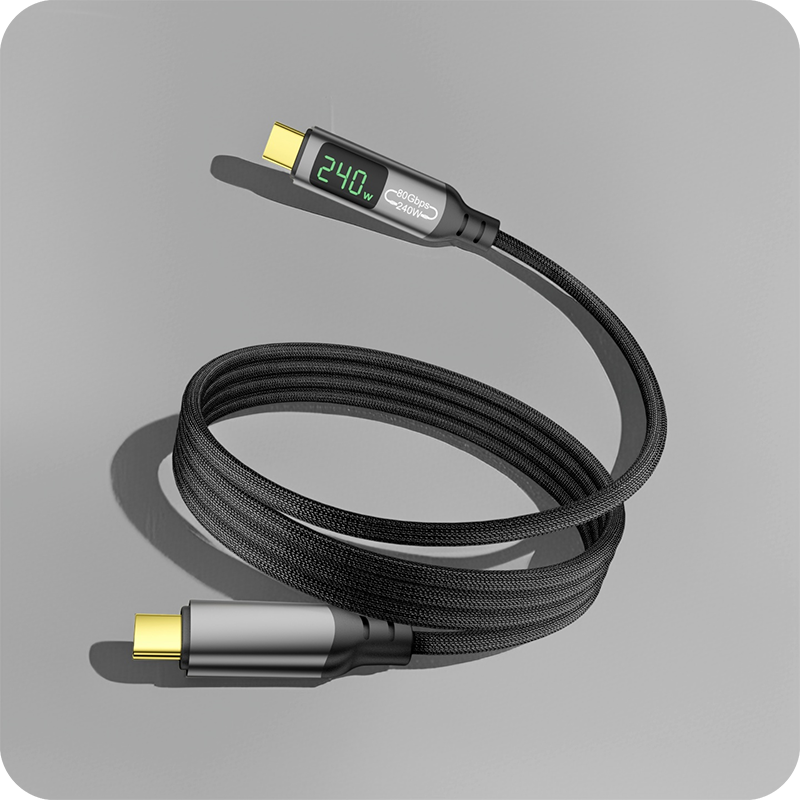
- 240W EPR power delivery passthrough in docks — charges gaming laptops at full speed
Eilinks Electronics is actively developing Thunderbolt 5 cable solutions to meet the demands of the next-generation gaming ecosystem, with mass production planned for Q3 2026.
Best Practices for Gaming USB-C Cable Selection
| Gaming Use Case | Recommended Cable Spec |
|---|---|
| 4K@144Hz gaming monitor (USB-C) | Full-featured USB-C with DP 1.4 Alt Mode, 40Gbps |
| eGPU enclosure | Thunderbolt 4 or Thunderbolt 5 certified cable |
| External NVMe SSD for games | USB4 Gen 3×2 (40Gbps) cable |
| Gaming controller/headset | Standard USB-C 2.0 data cable (480Mbps sufficient) |
| Laptop charging during gaming | EPR-rated USB-C cable, 240W, <2m length |
| VR headset data+power | USB-C cable with 10Gbps data + 15W+ power delivery |
Conclusion: Invest Where It Matters
For gaming applications, cable quality matters most for display signal integrity, eGPU/storage bandwidth, and charging reliability — not for microsecond propagation delays. Eilinks Electronics offers certified USB-C Cable products tested to support full-bandwidth gaming applications, with documented electrical specifications that let you confidently choose the right cable for your gaming setup. Explore our full range of Thunderbolt 5 Cable, Thunderbolt 4 Cable, and USB4 Cable solutions for professional gaming infrastructure.
