
USB-C Cable USB Power Delivery PPS Mode Explained 2026
Understanding USB-C cable USB Power Delivery PPS mode is crucial in 2026 as more devices demand precise voltage control for faster and safer charging. PPS, or Programmable Power Supply, is an extension of the USB PD 3.0 specification that allows the charger to adjust voltage and current in fine 20mV and 50mA increments. Eilinks Electronics offers a complete range of PPS-compatible USB-C cables that support this advanced charging mode for smartphones, laptops, and other devices.
What Is USB PD PPS Mode?
Traditional USB Power Delivery operates with fixed voltage rails: 5V, 9V, 15V, and 20V. The device selects one of these fixed voltages, and the charger delivers it. PPS mode changes this paradigm by allowing the charger to dynamically adjust the voltage in 20mV steps between 3.3V and 21V, and the current in 50mA steps up to 5A. This granular control reduces power conversion losses inside the device, generating less heat and enabling faster charging.
PPS vs Fixed Voltage PD
| Feature | Fixed PD | PPS Mode |
|---|---|---|
| Voltage Steps | 5V, 9V, 15V, 20V | 3.3V-21V in 20mV steps |
| Current Steps | Fixed per profile | 50mA increments |
| Heat Generation | Higher (buck conversion loss) | Lower (near-direct charging) |
| Battery Health Impact | Standard | Improved (less thermal stress) |
| Real-Time Adjustment | No | Yes (every 10-30 seconds) |
| Max Power | 100W (PD 3.0) | 100W (PD 3.0) / 140W (PD 3.1) |
How PPS Charging Works
PPS mode operates through a continuous feedback loop between the charger, the USB-C cable, and the device. The process works as follows:
- Step 1: Device requests PPS mode during PD negotiation
- Step 2: Charger confirms PPS capability and provides available voltage/current ranges
- Step 3: Device requests specific voltage and current based on its current battery state
- Step 4: Charger delivers the requested power through the USB-C cable
- Step 5: Device monitors battery temperature and charge level, adjusting request every 10-30 seconds
- Step 6: As battery approaches full capacity, device reduces requested power gradually
This real-time feedback loop is what makes PPS charging both faster and safer than fixed-voltage PD. Eilinks Electronics cables maintain stable power delivery throughout these dynamic adjustments, ensuring consistent performance.
Devices That Use PPS Charging in 2026
PPS has become the dominant fast charging protocol for smartphones and is expanding to other device categories:
| Device Category | PPS Power | Voltage Range | Examples |
|---|---|---|---|
| Android Smartphones | 25-45W | 3.3-11V | Samsung Galaxy S26, Google Pixel 10 |
| Chinese Smartphones | 65-100W | 3.3-20V | Xiaomi 16, Oppo Find X8 |
| Tablets | 45-65W | 3.3-15V | Samsung Tab S10, iPad Pro |
| Laptops | 65-100W | 3.3-20V | Select ultrabooks |
| Power Banks | 25-65W | 3.3-20V | Anker, Samsung power banks |
Samsung Super Fast Charging and PPS
Samsung has been the biggest adopter of PPS mode through its Super Fast Charging branding. Samsung 45W Super Fast Charging 2.0 uses PPS at 9V/5A or 10V/4.5A. This is why Samsung phones require a 5A-rated USB-C cable with an eMarker chip for maximum charging speed. A standard 3A cable limits Samsung charging to 25W (9V/2.77A).
Eilinks Electronics 5A-rated cables are fully compatible with Samsung Super Fast Charging, delivering the full 45W that Galaxy S26 series devices can accept. Our cables pass Samsung compatibility testing to guarantee consistent performance.
Samsung PPS Charging Tiers
| Mode | Power | PPS Parameters | Cable Required |
|---|---|---|---|
| Fast Charging | 15W | 9V/1.67A (fixed PD) | Standard USB-C |
| Super Fast Charging | 25W | 9V/2.77A (PPS) | Standard USB-C |
| Super Fast Charging 2.0 | 45W | 9V/5A or 10V/4.5A (PPS) | 5A eMarker cable |
PPS and Battery Health
One of the most significant benefits of PPS mode is improved battery longevity. Traditional fixed-voltage charging forces the device to buck-convert a higher voltage down to battery voltage, generating heat in the process. PPS delivers a voltage closer to what the battery actually needs, reducing conversion losses and thermal stress.
Studies have shown that PPS charging can reduce peak battery temperature by 3-5 degrees Celsius compared to fixed-voltage PD at the same wattage. Over hundreds of charge cycles, this temperature reduction translates to measurably better battery capacity retention. Eilinks Electronics recommends PPS-compatible cables for users who prioritize long-term battery health.
Cable Requirements for PPS Charging
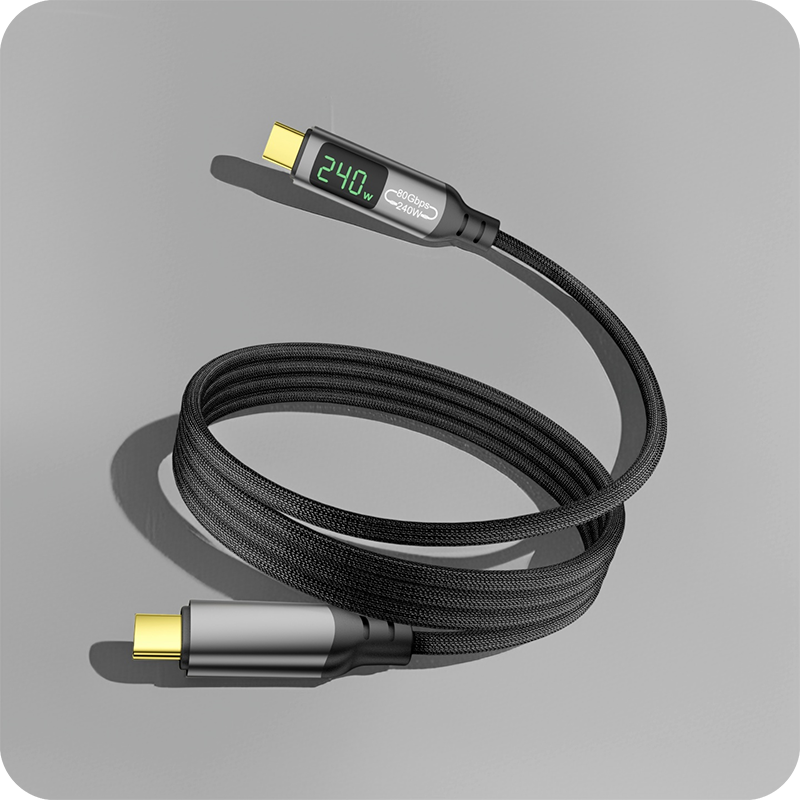
PPS mode does not require any special cable beyond standard USB Power Delivery requirements. However, for PPS charging above 3A (which includes Samsung 45W and high-power Chinese phone charging), you need a 5A-rated USB-C cable with an eMarker chip. For PPS up to 3A (25W Samsung charging), a standard cable works fine.
| PPS Power Level | Cable Requirement | Eilinks Product |
|---|---|---|
| Up to 25W (3A) | Standard USB-C | Standard USB-C cable |
| 25-100W (5A) | 5A eMarker cable | 5A USB-C cable |
| 100-240W (EPR) | EPR-rated cable | EPR USB-C cable |
FAQ Section
What is the difference between PPS and regular USB PD?
Regular USB PD uses fixed voltage rails (5V, 9V, 15V, 20V), while PPS mode allows the charger to adjust voltage in 20mV increments from 3.3V to 21V. This enables more efficient charging with less heat generation.
Do all USB-C cables support PPS?
PPS is a charger and device feature, not a cable feature. Any USB-C cable that supports the required power level will work with PPS mode. However, for PPS above 3A, you need a 5A eMarker cable from Eilinks Electronics.
Does iPhone support PPS charging?
iPhones support USB PD with fixed voltage profiles but do not currently use PPS mode for charging. Android devices, particularly Samsung, are the primary users of PPS. Eilinks Electronics cables support both PPS and fixed PD modes.
Can PPS charging damage my device?
No. PPS charging is actually safer than fixed-voltage PD because the voltage is matched more closely to what the battery needs, reducing heat. The USB-IF specification includes multiple safety checks including over-voltage and over-current protection.
How do I know if my charger supports PPS?
Look for “PPS” or “Programmable Power Supply” in the charger specifications. Samsung 45W chargers, many Anker chargers, and most 65W+ chargers from major brands support PPS. Eilinks Electronics recommends using a PPS charger with a quality USB-C cable for the best charging experience.
