
USB-C Cable USB4 Version 2.0 Full Specification Guide 2026
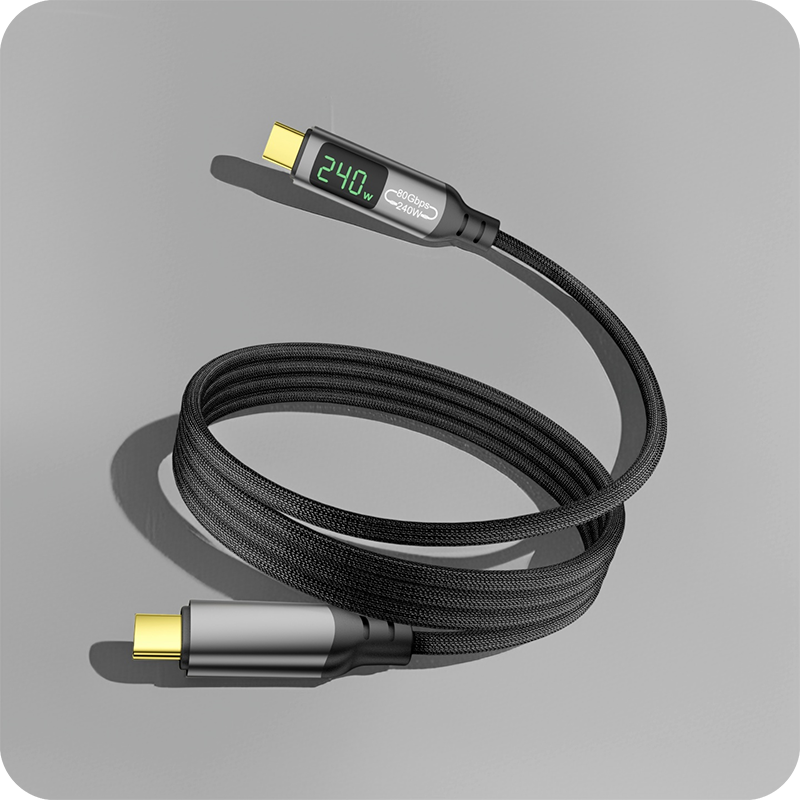
The USB-C cable USB4 Version 2.0 specification represents the pinnacle of connectivity technology in 2026. Delivering up to 80Gbps symmetric bandwidth, 120Gbps asymmetric mode, and 240W power delivery, USB4 v2.0 unifies the best of USB and Thunderbolt into a single standard. Eilinks Electronics is proud to offer fully certified USB4 Version 2.0 cables that meet every requirement of this groundbreaking specification. This guide covers the full spec in detail, from physical layer signaling to practical use cases.
USB4 Version 2.0 Key Specifications
USB4 Version 2.0, officially released by the USB-IF, builds on USB4 Version 1.0 with significant bandwidth improvements. Here are the core specifications:
| Parameter | USB4 v1.0 | USB4 v2.0 |
|---|---|---|
| Signaling Rate | 20 Gbps per lane | 40 Gbps per lane |
| Symmetric Bandwidth | 40 Gbps | 80 Gbps |
| Asymmetric Bandwidth | N/A | 120 Gbps (Tx) / 40 Gbps (Rx) |
| Power Delivery | Up to 100W | Up to 240W (PD 3.1) |
| Protocol Tunneling | USB 3.2, DP 1.4a | USB 3.2, DP 2.1, PCIe 4.0 |
| Backward Compatibility | USB 3.2, USB 2.0, TB3 | USB4 v1.0, USB 3.2, USB 2.0, TB3/TB4 |
| Cable Type | Passive or Active | Passive (?0.8m) or Active |
How USB4 v2.0 Achieves 80Gbps
USB4 Version 2.0 doubles the per-lane signaling rate from 20Gbps to 40Gbps using PAM3 (Pulse Amplitude Modulation 3-level) encoding. Unlike the NRZ encoding used in USB4 v1.0, PAM3 transmits 1.5 bits per symbol, achieving higher data density without doubling the frequency. This is the same fundamental approach used by Thunderbolt 5, and the two standards share significant physical layer compatibility.
PAM3 vs NRZ Encoding
| Encoding | Bits Per Symbol | Signal Levels | Used In | Efficiency |
|---|---|---|---|---|
| NRZ | 1 | 2 | USB 3.2, USB4 v1.0 | Standard |
| PAM3 | 1.5 | 3 | USB4 v2.0, Thunderbolt 5 | 50% higher |
| PAM4 | 2 | 4 | Some networking | Highest complexity |
Asymmetric Mode: 120Gbps for Displays
One of the most exciting features of USB4 v2.0 is the asymmetric bandwidth mode. In this configuration, three lanes are allocated for transmit (120Gbps) and one lane for receive (40Gbps). This is ideal for driving high-resolution external displays where the data flow is predominantly one-directional.
With 120Gbps of transmit bandwidth, a single USB4 v2.0 cable can drive:
- One 8K display at 60Hz with HDR
- Two 6K displays at 60Hz simultaneously
- One 4K display at 240Hz for gaming
Eilinks Electronics USB4 v2.0 cables support both symmetric and asymmetric modes, automatically switching based on the connected devices.
USB4 v2.0 Cable Requirements
Not every USB-C cable supports USB4 v2.0 speeds. The specification imposes strict requirements on cable construction and components:
Passive Cable Limits
| Parameter | Requirement |
|---|---|
| Maximum Length (Passive) | 0.8 meters |
| Impedance | 85 ohms differential |
| Insertion Loss | ? 7.5 dB at 20 GHz |
| eMarker | Required (USB4 v2.0 type) |
| Shielding | Full braid + foil per pair |
Active Cable Options
For longer runs up to 2 meters, USB4 v2.0 active cables incorporate retimer chips that regenerate the signal. These retimers compensate for signal loss over distance, maintaining full 80Gbps bandwidth. Eilinks Electronics offers active USB4 v2.0 cables in 1m and 2m lengths using industry-leading retimer technology.
USB4 v2.0 vs Thunderbolt 5
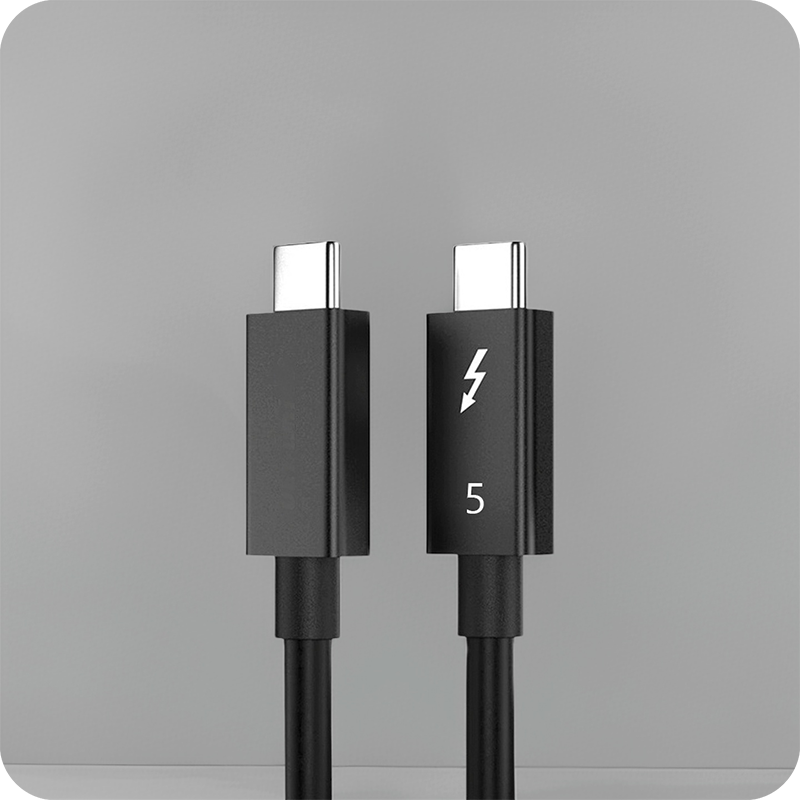
USB4 Version 2.0 and Thunderbolt 5 share the same physical layer (PAM3 at 40Gbps per lane) but differ in feature set and certification requirements. Here is a comparison:
| Feature | USB4 v2.0 | Thunderbolt 5 |
|---|---|---|
| Max Symmetric Bandwidth | 80 Gbps | 80 Gbps |
| Max Asymmetric Bandwidth | 120/40 Gbps | 120/40 Gbps |
| Power Delivery | Up to 240W | Up to 240W |
| PCIe Tunneling | Optional | Mandatory |
| DisplayPort Tunneling | DP 2.1 | DP 2.1 |
| Certification | USB-IF | Intel |
| Typical Price | Lower | Higher |
For users who need guaranteed PCIe tunneling and Thunderbolt networking, a Thunderbolt 5 cable is the right choice. For general high-speed connectivity, USB4 v2.0 cables from Eilinks Electronics deliver identical performance at a more accessible price.
Practical Use Cases for USB4 v2.0
USB4 v2.0 transforms what a single USB-C cable can accomplish. Key use cases include professional video editing with direct SSD access at 80Gbps, dual 6K display setups through a single cable dock, external GPU enclosures for laptop gaming, and high-speed networking between computers. Eilinks Electronics USB4 v2.0 cables are tested to deliver consistent 80Gbps performance across all these scenarios.
FAQ Section
Is USB4 Version 2.0 the same as Thunderbolt 5?
They share the same physical layer and maximum speeds, but Thunderbolt 5 has stricter mandatory requirements including PCIe tunneling. A USB4 v2.0 cable may work with Thunderbolt 5 devices, but full Thunderbolt 5 functionality requires Intel-certified cables.
Do I need a new cable for USB4 v2.0?
Yes. USB4 v1.0 cables do not support the 40Gbps per lane signaling of v2.0. You need a cable specifically certified for USB4 v2.0, like those from Eilinks Electronics.
Can USB4 v2.0 cables charge at 240W?
Yes, when the cable is rated for PD 3.1 EPR. Eilinks Electronics USB4 v2.0 cables support up to 240W charging alongside 80Gbps data simultaneously.
What is the maximum length for USB4 v2.0 passive cables?
The USB-IF specification limits passive USB4 v2.0 cables to 0.8 meters. For longer runs, use active cables with retimers from Eilinks Electronics.
Does USB4 v2.0 work with older USB-C devices?
Yes. USB4 v2.0 is backward compatible with USB4 v1.0, USB 3.2, USB 2.0, and Thunderbolt 3/4. The connection will operate at the speed of the slowest device or cable in the chain.
