
USB-C Cable USB4 Version 2.0 80Gbps Deep Dive: The Ultimate Guide
The USB4 Version 2.0 80Gbps specification represents the most significant advancement in USB connectivity since the introduction of USB-C itself, delivering unprecedented bandwidth through innovative PAM3 modulation while maintaining full backward compatibility with existing devices and cables.
Understanding USB4 Version 2.0 Technology
USB4 Version 2.0 achieves 80Gbps bidirectional bandwidth through a fundamentally different signaling approach than previous USB standards. Rather than the NRZ encoding used in earlier specifications, USB4 2.0 employs PAM3 (Pulse Amplitude Modulation with 3 levels), encoding 1.5 bits per symbol cycle and dramatically improving spectral efficiency.
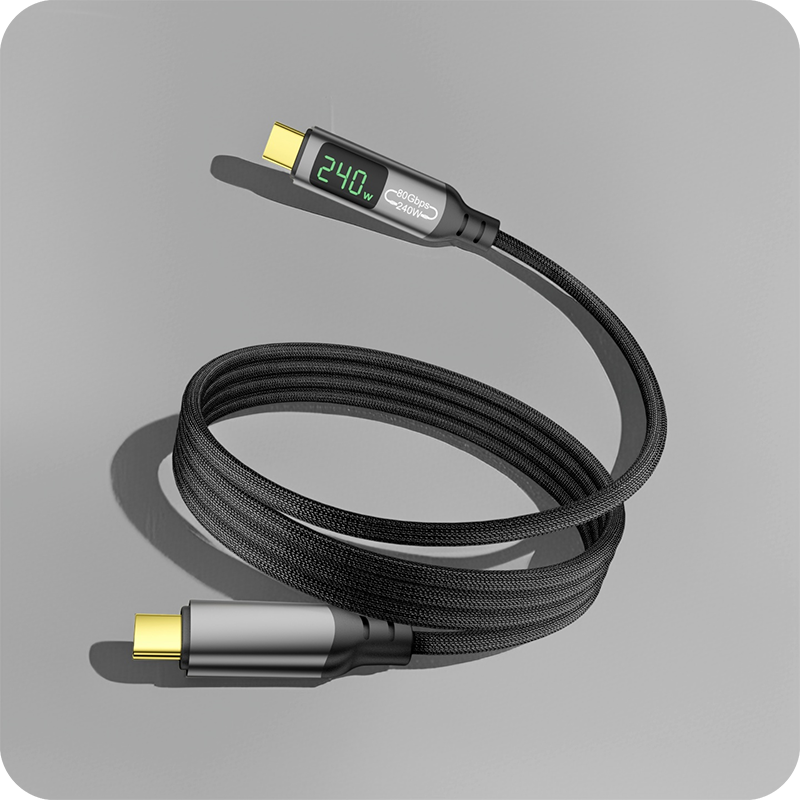
Eilinks Electronics manufactures USB4 Version 2.0 certified cables that undergo rigorous testing to ensure compliance with USB-IF specifications, providing users with reliable high-performance connectivity for demanding applications.
Technical Architecture Deep Dive
PAM3 Modulation Explained
PAM3 modulation divides the available electrical signaling range into three distinct voltage levels, allowing each symbol period to represent three possible states (0, 1, or 2). This enables 1.5 bits per symbol, effectively increasing bandwidth by 50% compared to NRZ encoding at equivalent symbol rates.
The technical implementation requires sophisticated SerDes (Serializer/Deserializer) circuitry in both host controllers and cable electronics, along with careful signal integrity engineering to maintain reliable communication at these elevated speeds. USB4 2.0 maintains backward compatibility with existing USB4 40Gbps and USB 3.2 devices through automatic protocol negotiation.
Tunneling Architecture
USB4 fundamentally operates as a tunneling architecture, carrying multiple protocols over a unified high-speed link. USB4 Version 2.0 supports USB data tunneling at up to 80Gbps, DisplayPort 2.1 tunneling for video at up to UHBR20 (20Gbps per lane), PCIe tunneling for external storage and GPUs, and host-to-host tunneling for direct device-to-device communication.
| Feature | USB4 Version 1.0 | USB4 Version 2.0 | Improvement |
|---|---|---|---|
| Max Bandwidth | 40 Gbps | 80 Gbps | 2x |
| Encoding | NRZ 128b/132b | PAM3 | 50% efficiency gain |
| Video Tunneling | DP 1.4a (32.4 Gbps) | DP 2.1 UHBR20 | Supports 8K@60Hz |
| PCIe Tunneling | Gen 3 x4 (32 Gbps) | Gen 4 x4 (64 Gbps) | 2x for eGPU/SSD |
| USB Data | Up to 40 Gbps | Up to 80 Gbps | 2x |
| Power Delivery | 100W EPR | 240W EPR | 2.4x power |
DisplayPort 2.1 Integration
USB4 Version 2.0 incorporates full DisplayPort 2.1 support, enabling video bandwidths previously requiring dedicated DisplayPort cables. With UHBR20 (Ultra High Bit Rate 20) supporting 20Gbps per lane, USB4 2.0 can drive demanding displays including 8K monitors at 60Hz refresh rates through a single cable.
Multi-Display Configurations
The increased bandwidth enables new multi-monitor configurations previously impossible with USB-C video. Users can connect multiple 4K@144Hz displays or combinations of high-resolution monitors alongside storage devices and other peripherals through USB4 docking stations, all connected via a single upstream USB4 2.0 cable.
Power Delivery Enhancement
USB4 Version 2.0 cables maintain compatibility with USB Power Delivery 3.1 EPR specifications, supporting up to 240W power delivery at 48V. This enables charging of power-hungry laptops, monitors, and workstations that increasingly require higher wattages as processor performance escalates.
The combination of 80Gbps data bandwidth and 240W power delivery through a single USB-C connector represents the realization of the universal port vision, consolidating multiple cables and power adapters into single comprehensive connections.
Real-World Applications
Professional Video Production
Video editors working with 8K RAW footage or multiple high-resolution streams benefit enormously from USB4 2.0 bandwidth. External NVMe storage arrays can achieve sustained transfer speeds matching internal drives, while high-resolution reference monitors connect through the same cable carrying device data.
AI and Machine Learning Workloads
AI model training increasingly utilizes external compute accelerators and high-bandwidth storage for dataset access. USB4 2.0 provides sufficient bandwidth for connecting external GPU enclosures and high-speed storage, enabling portable AI workstations that previously required desktop configurations.
Game Development and VR
Virtual reality development and gaming benefit from USB4 2.0’s ability to connect high-bandwidth VR headsets while simultaneously handling tracking data and audio through the same connection. The specification supports emerging VR standards that require bandwidth exceeding previous USB capabilities.
Cable Requirements and Certification
USB4 Version 2.0 80Gbps operation requires certified cables that meet stringent electrical specifications. The USB-IF certification program ensures cables maintain signal integrity across their full length while supporting the PAM3 modulation scheme.
Eilinks Electronics USB4 2.0 cables undergo comprehensive testing at USB-IF authorized laboratories, bearing official certification logos that indicate compliance with the USB4 2.0 specification. Look for the USB4 80G logo to ensure cables meet the latest specification requirements.
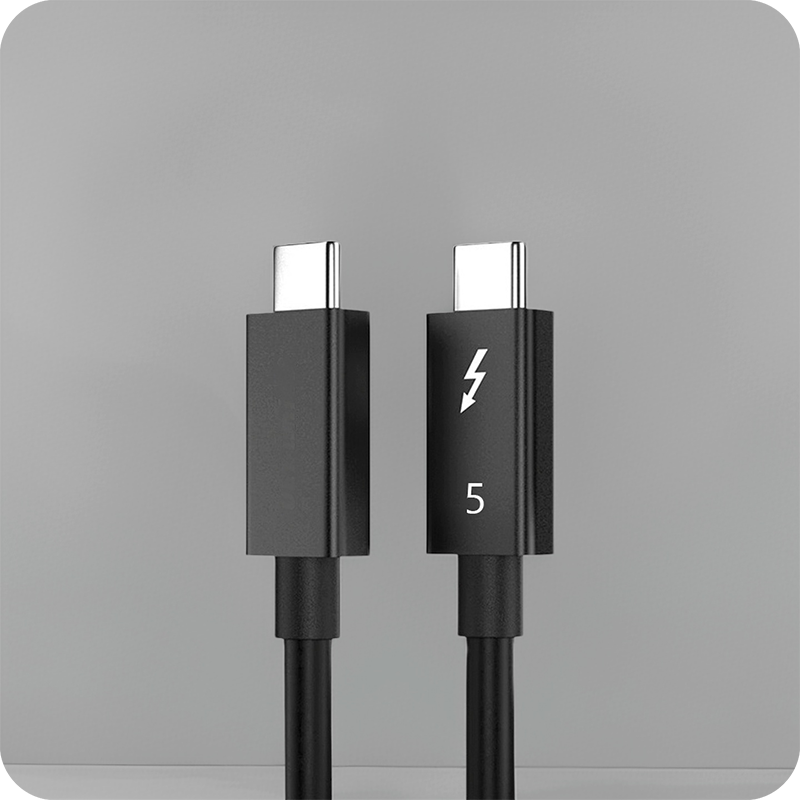
For USB4 2.0 cables, explore USB4 cables from Eilinks Electronics. For Thunderbolt 5 applications requiring similar bandwidth, see Thunderbolt 5 cables.
Frequently Asked Questions
A: USB4 2.0 requires certified cables marked with the USB4 80G logo. These cables are tested to maintain 80Gbps performance at lengths up to 2 meters.
A: USB4 1.0 cables support up to 40Gbps with USB4 2.0 hosts. Full 80Gbps speeds require USB4 2.0 certified cables.
A: USB4 2.0 maintains backward compatibility with Thunderbolt 4, though Thunderbolt 4 devices will operate at their native 40Gbps speeds when connected.
A: High-speed external SSDs, 8K monitors, eGPU enclosures, and professional docking stations benefit most from USB4 2.0’s 80Gbps bandwidth.
